A Beginner’s Guide to a Classical Japanese Martial Tradition
For more than four centuries, Enshin Ryū has been transmitted from teacher to student, preserving martial methods whose origins reach back to Japan’s age of the samurai.
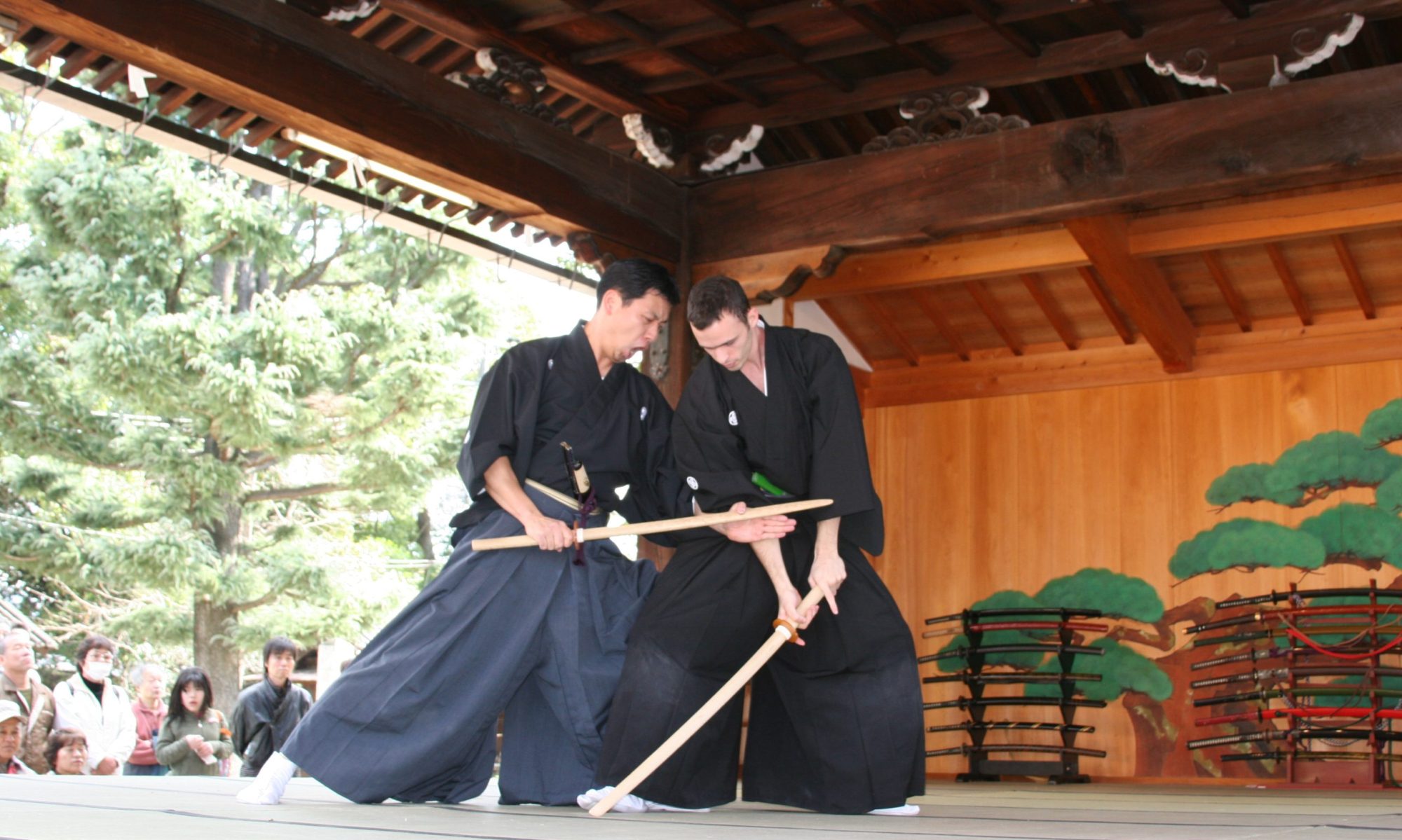
Unlike modern martial arts developed primarily for sport or competition, Enshin Ryū is a koryū—a classical Japanese martial tradition rooted in the combative knowledge and culture of the samurai period.
Today, Enshin Ryū continues to be practiced as a living tradition through direct instruction and transmission from teacher to student.
Origins in the Sengoku Period
Enshin Ryū traces its origins to around 1580, during Japan’s Sengoku, or “Warring States,” period.
Its founder, Inugami Sakon Shōgen Nagakatsu, was a warrior from Hikone in Ōmi Province who served as one of the guards of the Kyoto Imperial Palace. After receiving his family’s sword tradition from his father, he studied methods of kumiuchi, or grappling in armor, under Hayami Nagato no Kami Enshin.
By bringing these grappling methods together with the sword teachings transmitted within the Inugami family, Nagakatsu established the martial system known as Kumiuchi Kenden.
The tradition was passed through successive generations and later reached the Kobashi family in Sanuki, present-day Kagawa Prefecture. During the Edo period, it underwent a process of reform that incorporated knowledge from several other classical martial schools while preserving the older teachings and principles of Enshin Ryū.
What Is Taught?
Enshin Ryū is not limited to swordsmanship. It is a comprehensive martial tradition in which armed and unarmed disciplines support and deepen one another.
The curriculum includes:
Iaijutsu – drawing the sword and responding immediately to an attack.
Yawara – foundational unarmed methods of grappling.
Kumiuchi – close-combat grappling methods.
Kenjutsu – swordsmanship.
Kumiuchi Kenden – advanced methods integrating grappling with the sword, including the use of the tachi and ōdachi.
Students progress gradually through the curriculum. Training develops not only technical ability, but also an understanding of timing, distance, posture, awareness, etiquette, self-discipline, and character.
The individual disciplines are not studied as separate collections of techniques. Iaijutsu, yawara, kumiuchi, kenjutsu, and Kumiuchi Kenden are connected parts of a larger martial system.
The Ōdachi Tradition
One of the distinctive features of Enshin Ryū is its preservation of techniques using the ōdachi, a long sword traditionally used in the school with a blade measuring approximately 100 centimeters.
Because of its greater size and weight, the ōdachi must be handled differently from a standard-length sword. Enshin Ryū preserves an extensive body of teachings for its use within Kumiuchi Kenden.
Only a small number of surviving classical traditions continue to transmit substantial methods involving this type of long sword.
A Living Tradition
Enshin Ryū is not simply a collection of old techniques or a museum piece preserved unchanged from the past.
Every classical tradition has passed through different teachers, historical periods, and circumstances. Enshin Ryū has likewise developed over generations while maintaining continuity with the teachings transmitted before it.
Its preservation depends on regular practice, direct instruction, careful documentation, and the responsible transmission of knowledge from one generation to the next.
The aim is not merely to reproduce the outward form of old movements. It is to preserve the technical principles, knowledge, spirit, and cultural heritage entrusted to each generation.
Beginning the Study of Enshin Ryū
Beginners normally begin with Iaijutsu and Yawara, where they learn fundamental posture, movement, sword handling, etiquette, and awareness.
As their understanding develops, students may progress into the other areas of the curriculum. Each stage provides the foundation for what follows, gradually revealing how the armed and unarmed teachings of Enshin Ryū form a unified system.
No previous martial arts experience is required to begin. What matters most is a willingness to practice carefully, consistently, and with respect for the tradition.
Learn More
To continue exploring Enshin Ryū:
Visit the Practice page to learn more about the Curriculum.
Read about the History and Lineage of the tradition.
Explore the Enshin Ryū Hyōhō article for a deeper examination of it, written by Fumon Tanaka, the late Sōke of Enshin Ryū.
Contact us to learn more about current and future training opportunities.
An abridged translation from the late Sōke Tanaka Fumon’s book, Enshin-ryū Hyōhō: The True Transmission of Third-Generation Nichikan.
Enshin-ryū Origins
The origins of Enshin-ryū lie in the Sengoku period, when Oda Nobunaga was pursuing the unification of “all under heaven” during the time of Emperor Ōgimachi, in the 1580s.
Originally from Hikone in Ōmi province, Inugami Sakon Shōgen Nagakatsu, a warrior of the northern guard of the Kyoto Imperial Palace, received his family’s sword tradition from his father, Hyōgo Nagatsugu. He gathered together the martial teachings orally transmitted by his ancestors and also learned the methods of kumiuchi from Hayami Nagato-no-kami Enshin, another warrior of the palace guard.
The resulting system was called Hyōhō Kumiuchi Kenden, and from it the tradition of Enshin-ryū arose.
However, because these events took place so long ago, little is known beyond the claim that the Inugami family descended from court nobles of the Fujiwara line of the Nakatomi clan, and that Nagakatsu’s son Nagatomo was an extraordinary master who founded Kyūshin-ryū Taijutsu.
The Revival of the Tradition by Kobashi Shōbei
In the Bunsei era of the Edo period—the 1820s—Kobashi Shōbei Masahira of Enza in Sanuki Province, who originally came from the Yoshida family, lamented that the lineage of Enshin-ryū transmitted in the Yoshida family had become uncertain after Inugami Gunbei. By incorporating Shintō Munen-ryū into the existing Enshin-ryū, he became the reviving founder of modern Enshin-ryū.
In addition to devoting himself to martial training, Shōbei possessed particularly strong imperial loyalist convictions. He trained and raised disciples and, as the country moved toward the closing years of the Tokugawa shogunate, it was discovered that he had sheltered numerous imperial loyalist activists. During the Ansei Purge, he was held responsible for this and imprisoned in an underground cell.
When he was eventually pardoned, his legs had become disabled from the prolonged cold inside the prison, and it appears that his disciples carried him out in a mokko carrying basket. In Shōbei’s later years, Emperor Meiji awarded him the Senior Fifth Rank in recognition of his service.
He died on May 1, 1906.
Fujimoto Ringorō
The second generation of modern Enshin-ryū was Fujimoto Ringorō. Ringorō was born in 1862 and was the husband of Shōbei’s daughter Ume. He studied under Shōbei from childhood and became highly skilled in taijutsu, iai, and suemono-giri. He was particularly accomplished in the secret sword technique known as Mizu-giri. Around 1877, he also incorporated Takamatsu Goryūgi into Enshin-ryū and reorganized its taijutsu as Yawara no jutsu.
He died on August 25, 1914, at the age of fifty-three.
Kobashi Nichikan Masanori
The third generation was Kobashi Nichikan Masanori, the son of Fujimoto Ringorō.
From childhood, Nichikan received instruction in jūjutsu and swordsmanship from his grandfather Shōbei. From his father, he learned the traditional Kumiuchi Kenden, Yawara no Jutsu, iai, and suemono-giri.
Although he entered the Buddhist priesthood at thirteen, he could not abandon his aspiration toward martial arts. He studied Takeuchi-ryū, learned iai under Kimura Chōzaburō and Ogasawara Yoshinobu, and later while in Tokyo studied at the Kōdōkan.
While serving as a Buddhist priest, Nichikan sought out and studied the martial traditions found wherever he was appointed. From the Taishō period into the Shōwa period, he gathered the secret methods of six schools regarded at the time as principal traditions of iai.
From this research he established Kobashi-ryū Kenpō and Enshin-ryū Iai Kenpō. Having divined January 13, 1931, as an auspicious day, he formally succeeded as the third-generation reviving head of Enshin-ryū.
Through the efforts of the Venerable Master Nichikan, Enshin-ryū spread widely and began the development that continues today.
The Forty-Two Iai Forms
Nichikan organised and integrated the iai forms he had studied and established a curriculum of forty-two forms:
Shoden: fifteen forms
Chūden: sixteen forms
Okuden: eleven forms
In this way, he completed a modern iai system accessible to contemporary practitioners, where in his words, truth, goodness, and beauty were brought into harmony.
After the Pacific War, Nichikan became resident priest of Sainen-ji in Osaka. As interest in traditional Japanese culture began to revive, he opened the modern iai system he had created to the public.
Within a short time, several hundred disciples gathered. On every training day, the grounds of Sainen-ji were filled with devoted practitioners.
The Revival of Kobudō
Nichikan worked not only for the preservation of Enshin-ryū but also for the revival of Japanese classical martial arts as a whole.
He gathered heads and instructors of traditional schools throughout Kansai and helped establish the All Japan Jūjutsu-dō Federation. He later participated in the founding of the Japan Kobudō Federation and the All Japan Iaido Federation, together with such figures as Ōno Kumao and Kōno Hyakuren of Musō Jikiden Eishin-ryū.
In his later years, he revived the earlier federation under the name All Japan Comprehensive Kobudō Federation and served as its first executive director until his death.
Yet his deepest concern remained the transmission of Enshin-ryū itself.
The Return to the Ancient Tradition
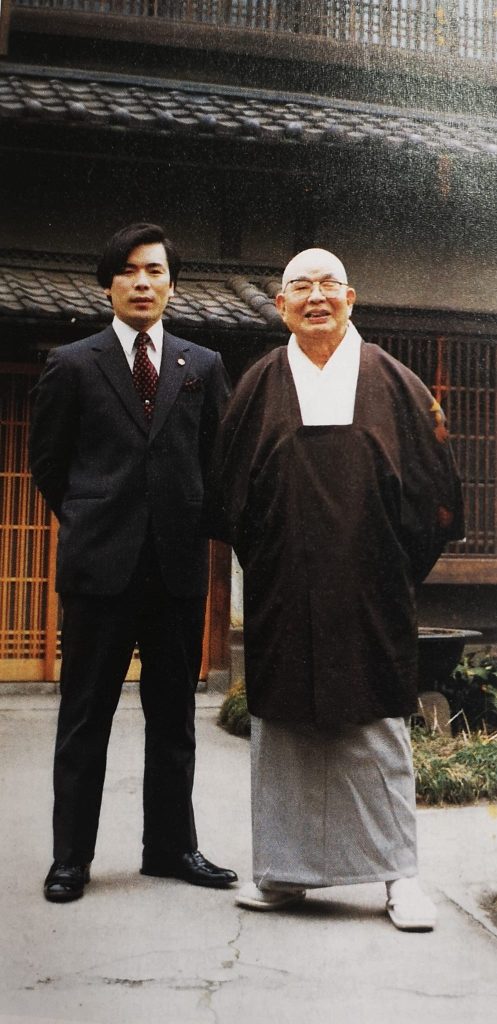
After suffering a collapse in old age, Nichikan summoned Tanaka Fumon and spoke to him of his childhood, the history of the Kobashi family, and the genealogy of Enshin-ryū. He ordered him to preserve these accounts in writing.
Nichikan recognised that much of the iai and Yawara no Jutsu then practiced under the Modern Enshin-ryū name consisted of methods he himself had created and developed.
He therefore released his disciples from Sainen-ji, allowing them to continue freely under the Enshin-ryū name. Some established their own dōjō, while others formed independent organisations.
Nichikan himself declared that, for the remainder of his life, he would return to the ancient Enshin-ryū inherited from his ancestors, and ordered Tanaka Fumon to study the tradition deeply and inherit it.
The closure of the Sainen-ji dōjō came as a bolt from the blue to the wider kobudō world. Yet from that point onward, Nichikan and Tanaka entered a period of concentrated study into the ancient transmission.
By Master Nichikan’s eighty-fourth year, the research had continued for five years. Tanaka studied everything Master Nichikan remembered: the ancient Kumiuchi Kenden; the iai transmitted by Shōbei the reviving founder; Kumiuchi Hyōhō Yawara no jutsu; long weapons; spear; naginata; staff; half-staff; shuriken; swordsmanship; rope-arresting techniques; and other arts.
During this period of training, Master Nichikan used a divination he had made at the beginning of 1975 to determine that his life would end within that year. He consequently became stricter in his instruction, and there were days when the training was truly life-threatening.
The final subject of their training, the Sword Dance, was a profoundly subtle art that Master Nichikan had created after great effort. Within the dance, he succeeded in incorporating the deepest secrets of the essence and application of Enshin-ryū Yawara no jutsu, together with its sword methods and battōjutsu. Part of the work remained incomplete, and Nichikan entrusted its completion to Tanaka Fumon.
At 11:10 a.m. on November 10, 1975, Kobashi Nichikan Masanori suddenly passed away from heart failure at the age of eighty-four. True to the nature of a lifelong practitioner, he had continued teaching until the evening before his death. Until the end, he trained in swordsmanship and Yawara no Jutsu, fulfilled his religious duties, and worked for the unity and preservation of the classical martial arts.
The Transmission Preserved
In Master Tanaka Fumon’s own words:
Looking back, during the fifteen years in which I was fortunate enough to study under the Venerable Master Nichikan, I was permitted to serve him as a live-in student during the final four years.
I was able to study Enshin-ryū from its ancient transmission through to its modern forms. The joy of encountering such an irreplaceable teacher and receiving his guidance and influence has become a lifelong treasure that continues to adorn both my body and spirit.
In 1985, Enshin-ryū was selected for the Ministry of Education’s permanent kobudō preservation documentary film project. I feel that our ability to preserve these arts allowed us to repay at least a small part of our debt to the Venerable Master Nichikan in the world beyond.