A Beginner’s Guide to a Classical Japanese Martial Tradition
For more than four centuries, Enshin Ryū has been transmitted from teacher to student, preserving martial methods whose origins reach back to Japan’s age of the samurai.
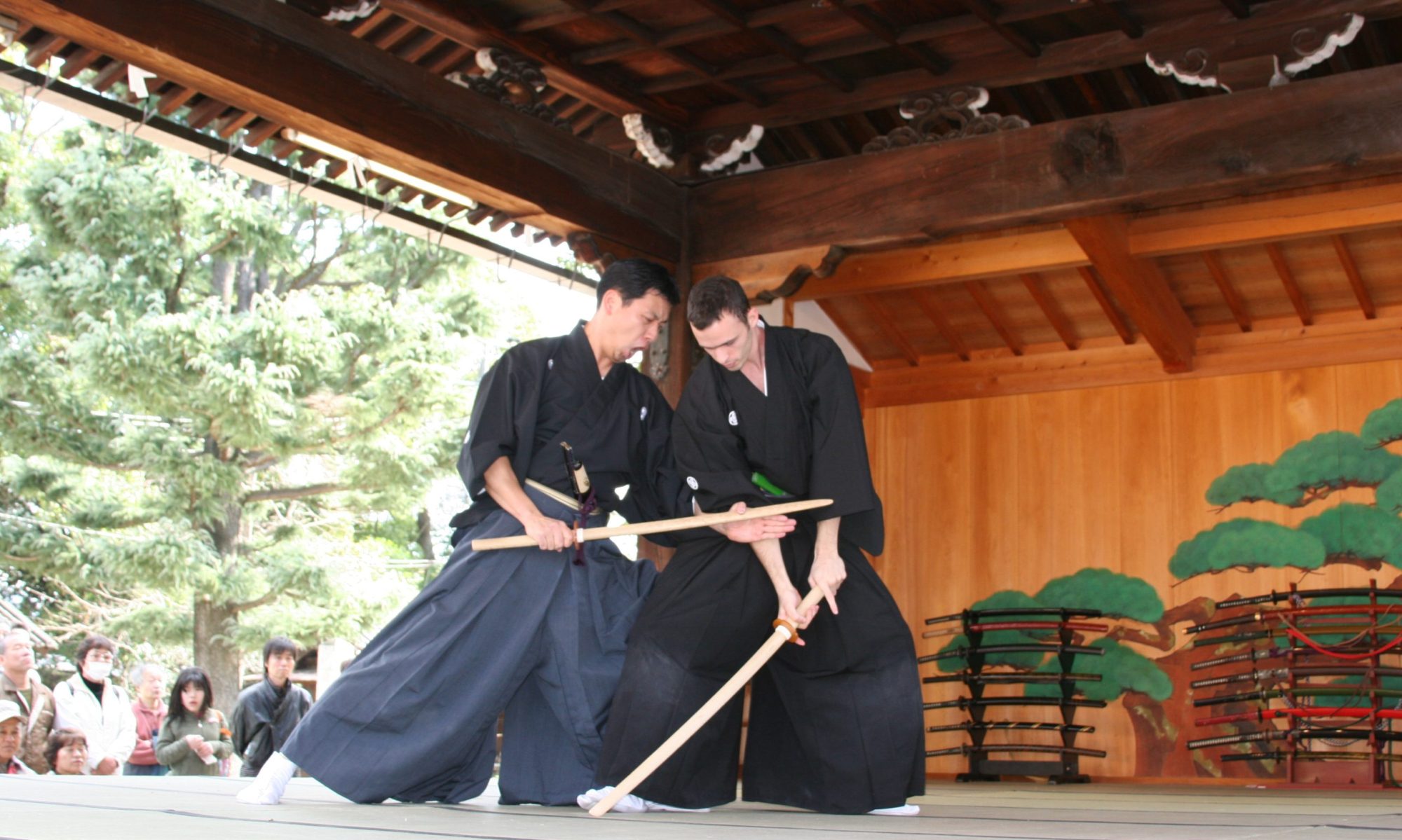
Unlike modern martial arts developed primarily for sport or competition, Enshin Ryū is a koryū—a classical Japanese martial tradition rooted in the combative knowledge and culture of the samurai period.
Today, Enshin Ryū continues to be practiced as a living tradition through direct instruction and transmission from teacher to student.
Origins in the Sengoku Period
Enshin Ryū traces its origins to around 1580, during Japan’s Sengoku, or “Warring States,” period.
Its founder, Inugami Sakon Shōgen Nagakatsu, was a warrior from Hikone in Ōmi Province who served as one of the guards of the Kyoto Imperial Palace. After receiving his family’s sword tradition from his father, he studied methods of kumiuchi, or grappling in armor, under Hayami Nagato no Kami Enshin.
By bringing these grappling methods together with the sword teachings transmitted within the Inugami family, Nagakatsu established the martial system known as Kumiuchi Kenden.
The tradition was passed through successive generations and later reached the Kobashi family in Sanuki, present-day Kagawa Prefecture. During the Edo period, it underwent a process of reform that incorporated knowledge from several other classical martial schools while preserving the older teachings and principles of Enshin Ryū.
What Is Taught?
Enshin Ryū is not limited to swordsmanship. It is a comprehensive martial tradition in which armed and unarmed disciplines support and deepen one another.
The curriculum includes:
- Iaijutsu – drawing the sword and responding immediately to an attack.
- Yawara – foundational unarmed methods of grappling.
- Kumiuchi – close-combat grappling methods.
- Kenjutsu – swordsmanship.
- Kumiuchi Kenden – advanced methods integrating grappling with the sword, including the use of the tachi and ōdachi.
Students progress gradually through the curriculum. Training develops not only technical ability, but also an understanding of timing, distance, posture, awareness, etiquette, self-discipline, and character.
The individual disciplines are not studied as separate collections of techniques. Iaijutsu, yawara, kumiuchi, kenjutsu, and Kumiuchi Kenden are connected parts of a larger martial system.
The Ōdachi Tradition
One of the distinctive features of Enshin Ryū is its preservation of techniques using the ōdachi, a long sword traditionally used in the school with a blade measuring approximately 100 centimeters.
Because of its greater size and weight, the ōdachi must be handled differently from a standard-length sword. Enshin Ryū preserves an extensive body of teachings for its use within Kumiuchi Kenden.
Only a small number of surviving classical traditions continue to transmit substantial methods involving this type of long sword.
A Living Tradition
Enshin Ryū is not simply a collection of old techniques or a museum piece preserved unchanged from the past.
Every classical tradition has passed through different teachers, historical periods, and circumstances. Enshin Ryū has likewise developed over generations while maintaining continuity with the teachings transmitted before it.
Its preservation depends on regular practice, direct instruction, careful documentation, and the responsible transmission of knowledge from one generation to the next.
The aim is not merely to reproduce the outward form of old movements. It is to preserve the technical principles, knowledge, spirit, and cultural heritage entrusted to each generation.
Beginning the Study of Enshin Ryū
Beginners normally begin with Iaijutsu and Yawara, where they learn fundamental posture, movement, sword handling, etiquette, and awareness.
As their understanding develops, students may progress into the other areas of the curriculum. Each stage provides the foundation for what follows, gradually revealing how the armed and unarmed teachings of Enshin Ryū form a unified system.
No previous martial arts experience is required to begin. What matters most is a willingness to practice carefully, consistently, and with respect for the tradition.
Learn More
To continue exploring Enshin Ryū:
- Visit the Practice page to learn more about the Curriculum.
- Read about the History and Lineage of the tradition.
- Explore the Enshin Ryū Hyōhō article for a deeper examination of it, written by Fumon Tanaka, the late Sōke of Enshin Ryū.
- Contact us to learn more about current and future training opportunities.