The Fumon Archive

When my teacher Tanaka Fumon, the late sōke of Enshin-ryū, passed away, many of his important documents and books came into my care.

Through this section, I hope to honor his memory, the memory of past sōke who preserved and transmitted the tradition, and to honor Enshin-ryū itself.

The Fumon Archive will present articles on the history and teachings of the ryūha, related topics, and findings from my ongoing research.

Remembering Sōke Tanaka Fumon

His Life, Teaching, and Transmission of Bushidō

One year has passed since my teacher, Sōke Tanaka Fumon, left us. To many people, he was known as a teacher and writer on Japanese classical martial arts. Within Enshin Ryū, he was the only one who fully received its ancient and modern teachings from Kobashi Nichikan Sensei and carried them into the next generation. To me, he was not only the teacher under whom I trained for twenty years, but also a turning point in my life.

The Lucky One-Eyed Turtle

Tanaka Fumon was born in the Osaka area in 1943.

Encouraged by his grandfather, who had served in the elite Imperial Guard (Konoe-hei) during the Meiji period, he began Kendō at the age of thirteen and continued studying other modern martial arts, reaching high dan ranks.

Then, while in his twenties, he heard about a Buddhist monk who was always practicing with a sword on the temple grounds and decided to go and meet him. In those days, training at Nichikan Sensei’s dōjō was conducted with a live blade, and because the young Tanaka did not own one, Nichikan Sensei refused to accept him as a student.

Continue reading “Remembering Sōke Tanaka Fumon”
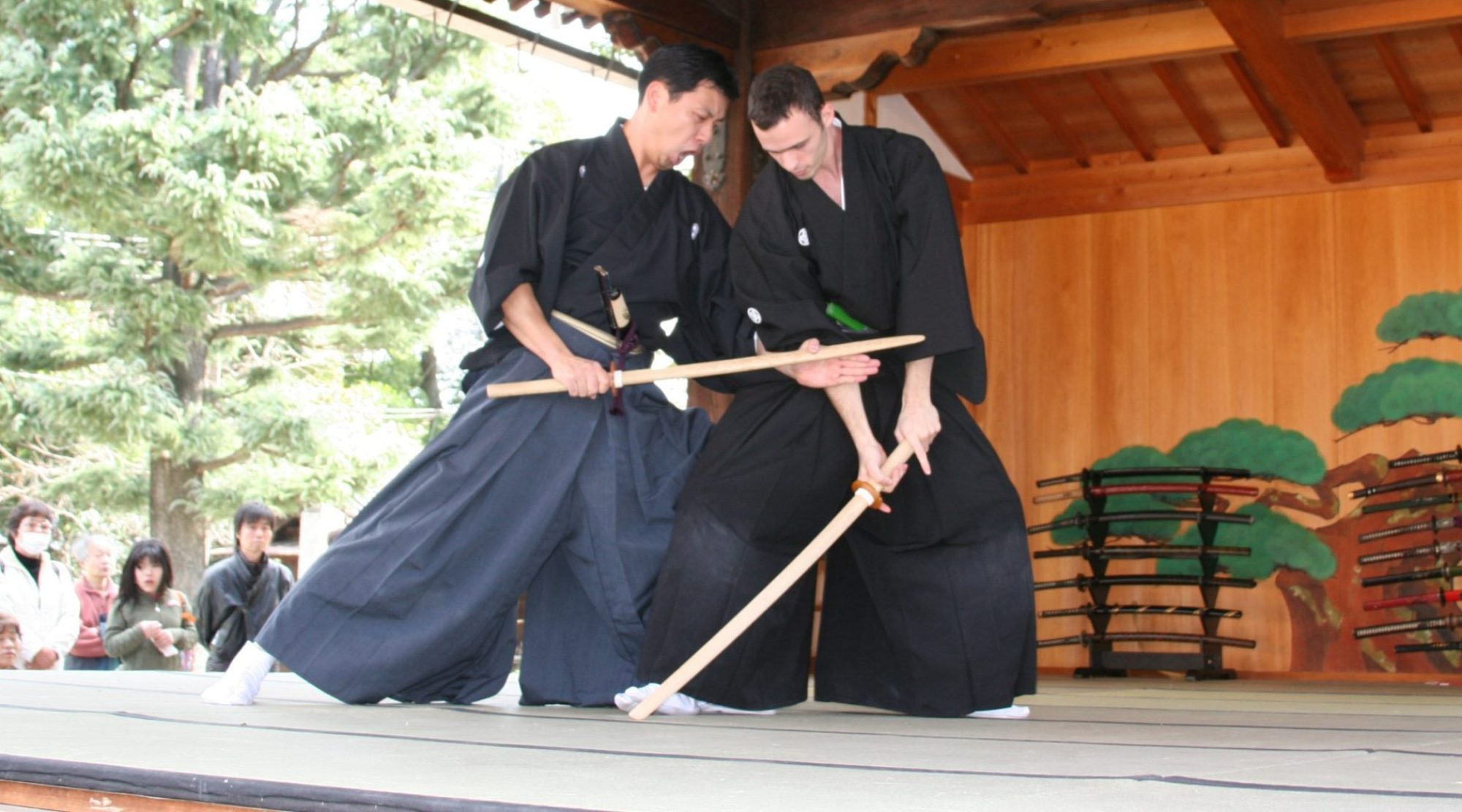
What Is Enshin Ryū?

A Beginner’s Guide to a Classical Japanese Martial Tradition

For more than four centuries, Enshin Ryū has been transmitted from teacher to student, preserving martial methods whose origins reach back to Japan’s age of the samurai.

Unlike modern martial arts developed primarily for sport or competition, Enshin Ryū is a koryū—a classical Japanese martial tradition rooted in the combative knowledge and culture of the samurai period.

Today, Enshin Ryū continues to be practiced as a living tradition through direct instruction and transmission from teacher to student.

Origins in the Sengoku Period

Enshin Ryū traces its origins to around 1580, during Japan’s Sengoku, or “Warring States,” period.

Its founder, Inugami Sakon Shōgen Nagakatsu, was a warrior from Hikone in Ōmi Province who served as one of the guards of the Kyoto Imperial Palace. After receiving his family’s sword tradition from his father, he studied methods of kumiuchi, or grappling in armor, under Hayami Nagato no Kami Enshin.

Continue reading “What Is Enshin Ryū?”

Enshin-ryū Hyōhō 圓心流兵法

An abridged translation from the late Sōke Tanaka Fumon’s book, Enshin-ryū Hyōhō: The True Transmission of Third-Generation Nichikan.

Enshin-ryū Origins

The origins of Enshin-ryū lie in the Sengoku period, when Oda Nobunaga was pursuing the unification of “all under heaven” during the time of Emperor Ōgimachi, in the 1580s.

Originally from Hikone in Ōmi province, Inugami Sakon Shōgen Nagakatsu, a warrior of the northern guard of the Kyoto Imperial Palace, received his family’s sword tradition from his father, Hyōgo Nagatsugu. He gathered together the martial teachings orally transmitted by his ancestors and also learned the methods of kumiuchi from Hayami Nagato-no-kami Enshin, another warrior of the palace guard.

The resulting system was called Hyōhō Kumiuchi Kenden, and from it the tradition of Enshin-ryū arose.

Continue reading “Enshin-ryū Hyōhō 圓心流兵法”