His Life, Teaching, and Transmission of Bushidō
One year has passed since my teacher, Sōke Tanaka Fumon, left us. To many people, he was known as a teacher and writer on Japanese classical martial arts. Within Enshin Ryū, he was the only one who fully received its ancient and modern teachings from Kobashi Nichikan Sensei and carried them into the next generation. To me, he was not only the teacher under whom I trained for twenty years, but also a turning point in my life.
The Lucky One-Eyed Turtle
Tanaka Fumon was born in the Osaka area in 1943.
Encouraged by his grandfather, who had served in the elite Imperial Guard (Konoe-hei) during the Meiji period, he began Kendō at the age of thirteen and continued studying other modern martial arts, reaching high dan ranks.
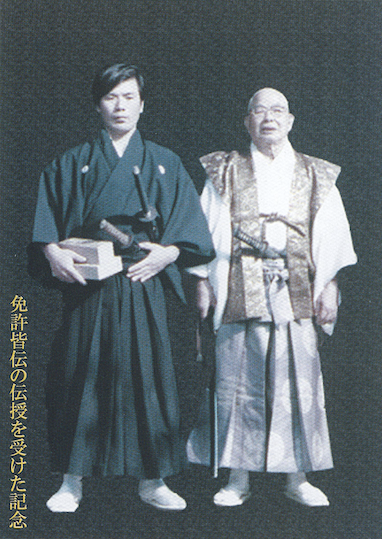
Then, while in his twenties, he heard about a Buddhist monk who was always practicing with a sword on the temple grounds and decided to go and meet him. In those days, training at Nichikan Sensei’s dōjō was conducted with a live blade, and because the young Tanaka did not own one, Nichikan Sensei refused to accept him as a student.
To meet this requirement, he obtained his grandfather’s sword and was then able to begin training under Sensei Kobashi Nichikan, the predecessor head of Enshin Ryū.
In his later years, Nichikan Sensei closed the public dōjō at the temple and taught the older Enshin Ryū that he had inherited from his ancestors exclusively to the devoted Tanaka, entrusting him with the responsibility of inheriting it and transmitting it to future generations.
This special relationship with Nichikan Sensei was something Sōke Tanaka cherished for the rest of his life. He regarded their meeting as an extraordinarily fortunate encounter—one that could happen only once in a thousand years.
When I asked Sōke Tanaka about the one-eyed turtle he had written about in my first scroll, he told me this Buddhist story:
“There was once a one-eyed turtle living deep in the vast ocean. The turtle suffered because its belly was always hot while its back was cold. It wished to rise to the surface, where the warmth of the sun could heat its cold back while the sea beneath it cooled its belly.
The Buddha told the turtle that only once in a thousand years would a rare tree float across the ocean with a hole in its trunk just the right size for the turtle. The one-eyed turtle would have to rise from the depths at exactly the right moment and, unable to properly judge the distance (because he has only one eye), somehow find that one rare tree and pass through the opening.”
Sōke Tanaka saw his own meeting with Nichikan Sensei in much the same way: somehow, he had been so fortunate to encounter that one rare teacher.
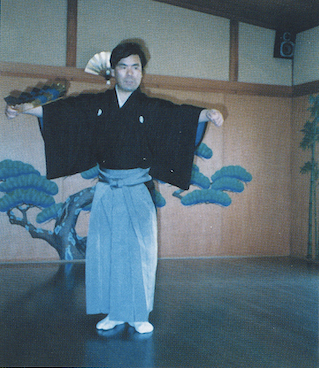
During his twenties and early thirties, Sōke Tanaka also worked as a professional Noh theatre singer and dancer, having trained in his uncle’s school of Noh. During these years, he also married, and his daughter, Midori-san, was born.
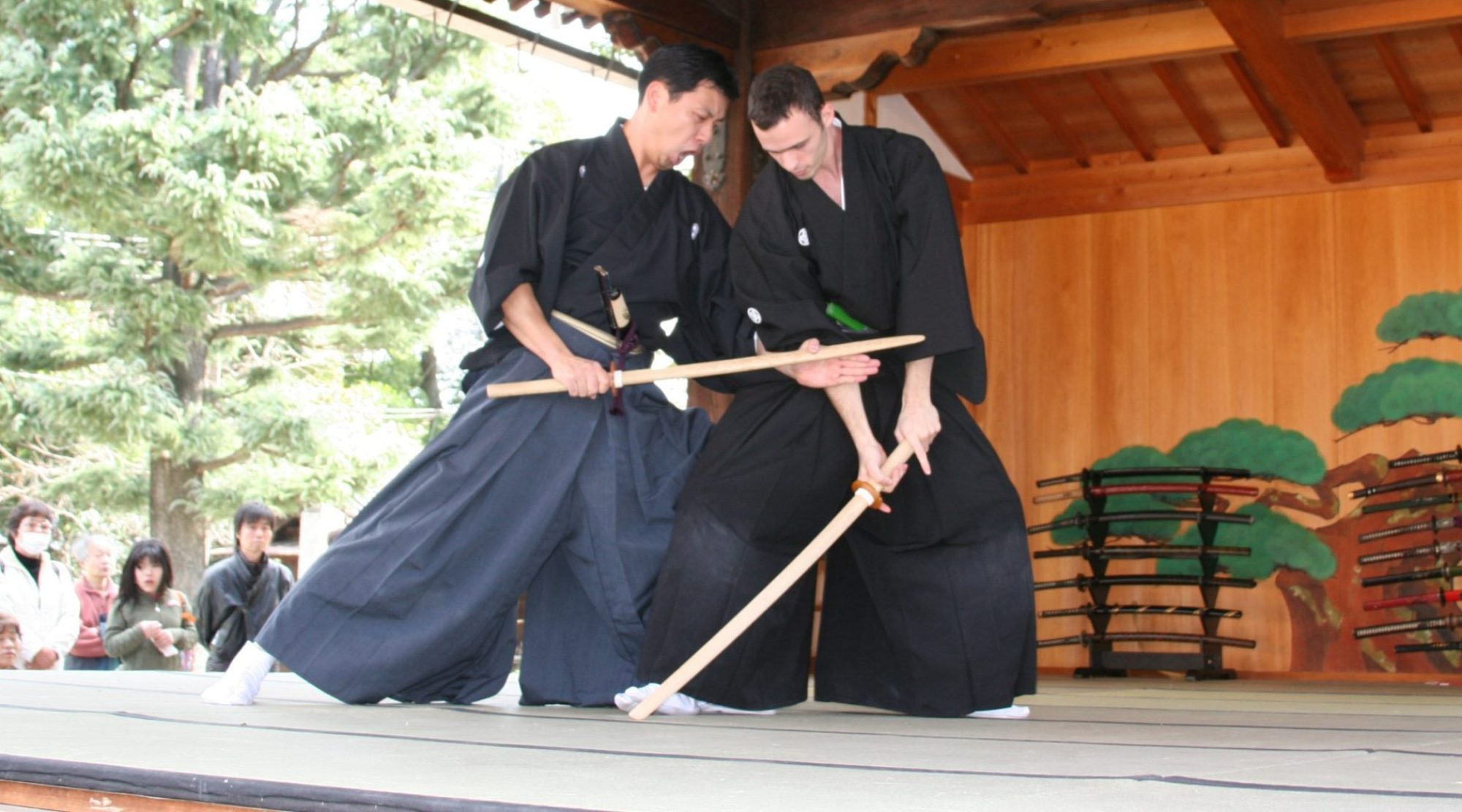
His Noh background remained visible in Enshin Ryū. In our school’s performances, he emphasized Noh theatre stage etiquette and taught us the basics of shimai, or Noh dance.
Noh theatre had been part of samurai culture since the Muromachi era, adding an element of elegance to it. Following this tradition, Sōke Tanaka and Nichikan Sensei created Enshin Ryū’s Tsurugi no Mai, combining the school’s swordsmanship with elements of Noh.
At a certain point, as the question of inheriting the school became more serious, Nichikan Sensei told him that he had to choose between Noh and Enshin Ryū, because it was impossible to pursue both within one lifetime.
Sōke Tanaka chose Enshin Ryū.
His Noh skills, however, never disappeared. He sometimes sang in the dōjō, giving us a sense of the timing and atmosphere while we practiced shimai, and on a couple of occasions, when I arrived early at the hombu dōjō, I also found him simply enjoying practicing Noh singing by himself.
Preserving Enshin Ryū in the Modern Age
From that point onward, Sōke Tanaka worked relentlessly to preserve and spread Enshin Ryū and koryū to the world.
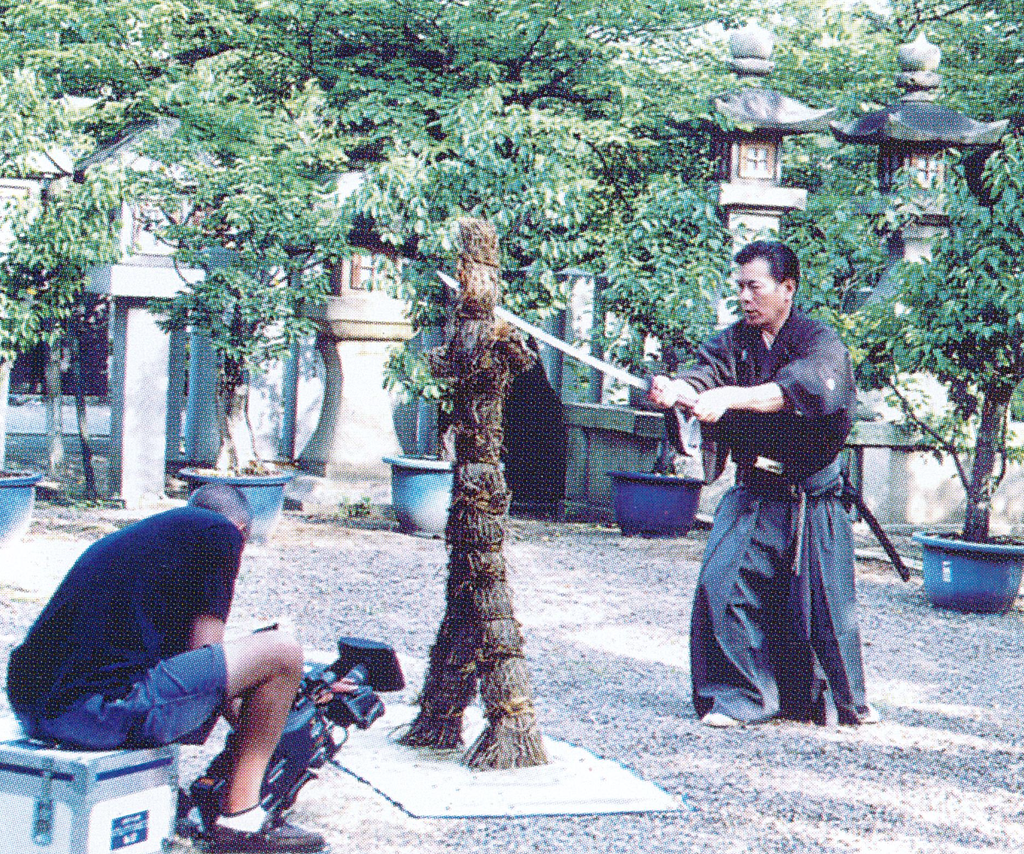
In 1985, Enshin Ryū was selected for the Ministry of Education’s kobudō preservation documentary film project, in which techniques from both the ancient transmission and the modern system were demonstrated.
In 1986, he published his first book, Enshin Ryū Hyōhō, publicly presenting the ryūha, including some of its older curriculum, for the first time. During his lifetime, he published four books in Japanese and two in English. He also created a DVD presenting some of the school’s techniques.
Sōke Tanaka appeared in numerous martial arts magazines and became widely known for demonstrations in Japan and abroad. Among these were annual Hōnō Enbu demonstrations in Osaka, as well as the fulfillment of one of his lifelong dreams as a martial artist: performing Hōnō Enbu at Katori and Kashima Shrines, places of particular significance to martial artists.
His first performance abroad was as part of a Japanese government martial arts delegation to Europe, and from that time onward he taught thousands of students in seminars abroad.
He also appeared in various television documentaries in Japan and abroad. In one, he even demonstrated the technique of cutting an arrow in mid-flight.
Beyond Enshin Ryū
Although this website is dedicated to Enshin Ryū, Sōke Tanaka’s martial arts studies extended far beyond it.
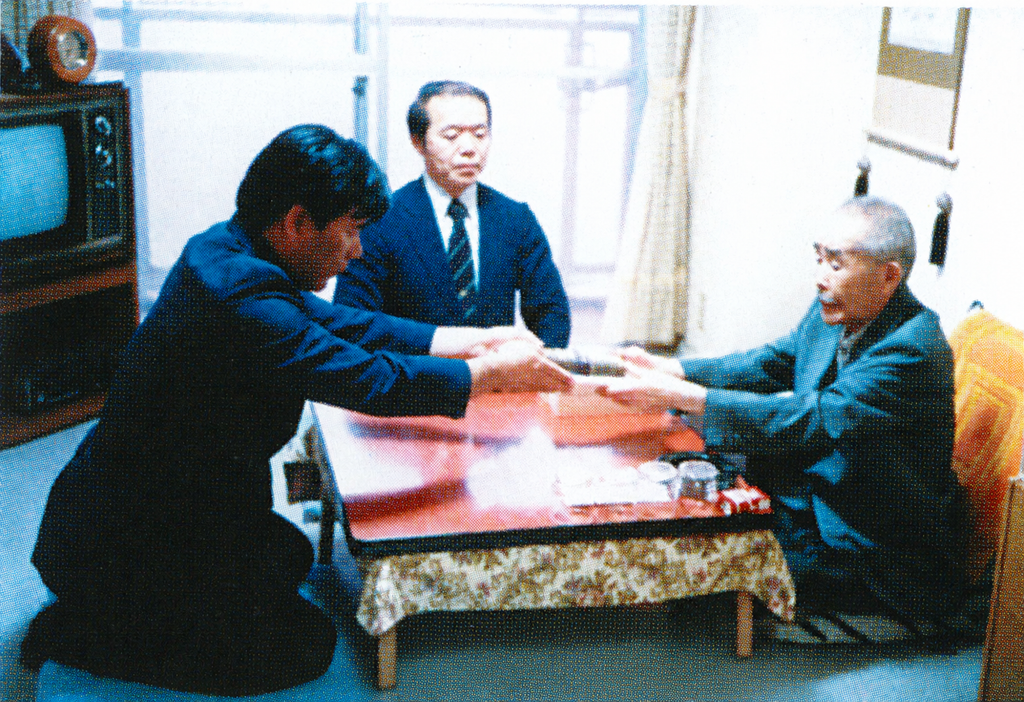
After the death of Nichikan Sensei in 1976, he and one of his closest friends, Shihan Matsuda Shigeharu, became private students of the famous Minaki Saburō, the 17th Sōke of Kukishin Ryū and Hontai Yōshin Ryū.
Three times a week, they would leave Osaka at around 4:30 a.m. in order to begin training in the Kobe area at 6:00 a.m., so that Minaki Sensei could begin his workday as a bonesetter on time. They continued training intensively in this way for about ten years, and in 1985 they received Kaiden and inherited the Minaki-den Kukishin Ryū Bujutsu line.
But there was still more.
Beginning in 1969, Sōke Tanaka started researching Shintō and found schools deeply related to Ko-Shintō and Shugendō that also had martial traditions. With the support of Viscount Kuki, who gave him dozens of scrolls and old manuscripts in 1980, Sōke Tanaka dedicated considerable time and effort to this work, which culminated in the recreation of Tenshin Hyōhō Sōden Kukamishin Ryū, of which he became the sōke.
Sōke Tanaka maintained a vast network of friendships with the sōke of other schools. He presented many of them in his books and exchanged high-level knowledge with them, sōke to sōke. Through these relationships, he accumulated an extraordinary amount of martial knowledge encompassing thousands of techniques.
Sōke Tanaka also possessed another deeply Japanese skill—that of the shokunin, the craftsman.
Throughout his life, he constantly made various kinds of weapons: Iaitō, wooden swords, multiple types of shuriken, as well as historical weapons that he reconstructed, such as the Karakuri Jitte and the Yagyū Dzue, to mention only a few.
At Sōke Tanaka’s otsuya, the wake held before his cremation, I met his younger sister for the first time. When she told me about their childhood, she said that even then, he was always making bokutō.
His Final Years
In the final years of his life, the Hombu Dōjō was dedicated mainly to teaching advanced students the deeper aspects of his ryūha.
Although his health had deteriorated during the last couple of years and he had reached the age of eighty-one, no one thought that his death was near. Only a couple of weeks before he passed away, he had even replaced the dōjō’s air conditioner. He was still sitting on the dōjō’s wooden floor with a straight back—teaching, discussing various topics, and telling old stories.
While I was working next to Himeji Castle, I received the call that he had suffered a stroke on October 11, 2025. He was immediately hospitalized and underwent surgery. At first, it seemed that his condition was improving, but after about a week of apparent improvement, his condition worsened rapidly within just a day or two, and on October 20 he passed away.
On his deathbed, he chose to be cremated without a funeral or a grave and asked that the news of his death not be spread for some time. Nevertheless, close family and disciples gathered to see him one final time before his cremation and to respectfully part from him.
With this, the extraordinary life of Sōke Tanaka Fumon, a preserver of Bushidō culture who dedicated his life to its transmission, came to its earthly end, leaving behind a vast legacy to carry forward and shoes that seem impossible to fill.
Remembering My Teacher
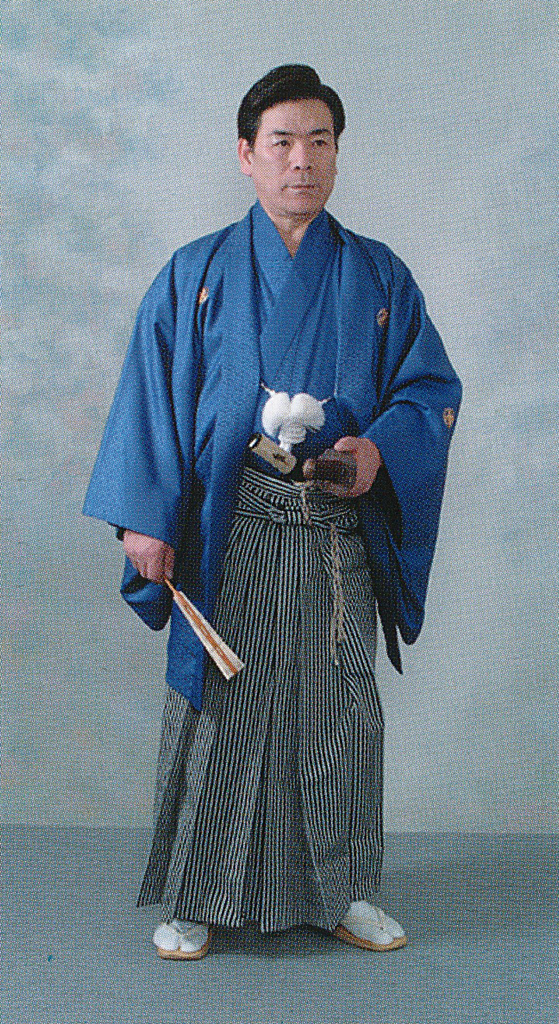
Looking at Sōke’s body dressed in montsuki and hakama, I felt as though I had been transported back in time and was looking at a Sengoku-period warlord.
It reminded me of a day about seventeen years earlier, when he was teaching the Shihan group.
He stood in the corner of the dōjō wearing his black keikogi and hakama, his arms crossed and his sword in his obi facing backwards. With a strict and fierce expression, he called out instructions to the Shihan and watched every movement they made.
“This is the closest thing there is to a samurai general,” I thought to myself.
And indeed, that was who he was.
One Reply to “Remembering Sōke Tanaka Fumon”